PDRN for Acne Scars: Does It Actually Work?
A clear-eyed look at the science, the scar types, and what to realistically expect.
Disclaimer: This article is intended for informational purposes only and does not constitute medical or dermatological advice. Always consult a licensed skincare professional before introducing new active ingredients. Some links in this article are affiliate links, meaning PDRN Science may earn a commission at no cost to you.
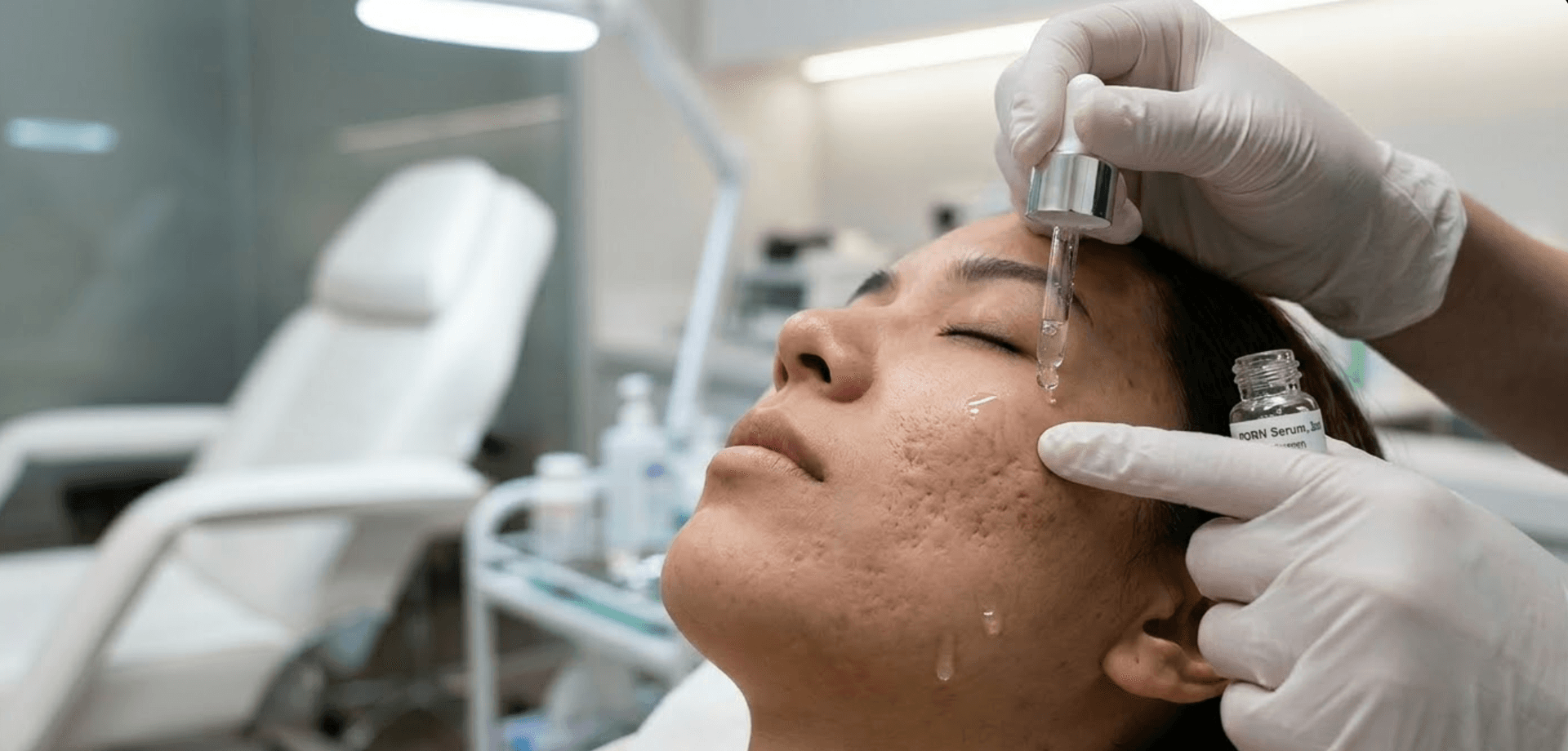
If You Have Tried Everything and Still Have Scars
Acne scars are one of the most frustrating skincare concerns to address. Unlike active breakouts, which at least respond to a clear category of treatments, scars represent structural changes to the skin that most topical products were never designed to repair.
Vitamin C helps with pigmentation. Retinol accelerates cell turnover. Niacinamide calms redness. These are all useful ingredients, but none of them directly address the collagen damage and tissue disruption that sit at the root of most acne scarring.
PDRN works differently. As a regenerative active, it targets the biological machinery responsible for producing new collagen and repairing damaged tissue. That distinction matters, and it is why PDRN has attracted growing interest from dermatologists and skincare researchers working in the acne scar space.
This article explains how PDRN addresses acne scars, which types of scarring it is best suited for, and what results are realistic to expect.
Why Acne Scars Are So Difficult to Treat
To understand why PDRN is relevant here, it helps to understand what acne scars actually are at a structural level.
When a breakout causes significant inflammation, the skin's repair process can go one of two ways. In some cases, it overproduces collagen, creating raised or hypertrophic scarring. More commonly, it underproduces collagen, leaving behind depressions or discoloration in the skin where the tissue was damaged and not fully rebuilt.
That underproduction of collagen is the core problem with atrophic acne scars, which account for the majority of acne scarring. The skin simply did not generate enough new collagen to restore the tissue to its original structure. No amount of surface-level exfoliation or brightening will rebuild what was never replaced.
This is where regenerative ingredients become relevant. Rather than addressing the surface appearance of a scar, they work to stimulate the processes that produce and remodel collagen beneath it.
How PDRN Addresses Acne Scarring
PDRN, or polydeoxyribonucleotide, is a bioactive compound derived from salmon DNA. When applied topically, it stimulates adenosine A2A receptors in the skin. This receptor activation triggers a cascade of cellular activity including fibroblast proliferation, collagen and elastin synthesis, and the suppression of inflammatory cytokines that can contribute to ongoing tissue damage.
In the context of acne scars, PDRN is doing several things simultaneously:
Stimulating new collagen production. Fibroblasts are the cells responsible for producing collagen. PDRN promotes fibroblast activity, which means it is actively working to rebuild the structural deficit that atrophic scars represent.
Reducing inflammation. Active acne and fresh scarring involve ongoing inflammatory activity that can worsen the final appearance of a scar. PDRN's anti-inflammatory properties help interrupt that cycle, which is particularly relevant for people dealing with both active breakouts and existing scars at the same time.
Supporting tissue repair. PDRN supplies salvage pathway nucleotides, which are the raw building blocks that skin cells use to repair damaged DNA and rebuild tissue. This is part of why the ingredient has been so extensively studied in wound healing and post-procedure recovery contexts.
Improving skin hydration and barrier function. Scar tissue tends to have compromised barrier function and lower moisture retention than surrounding skin. PDRN's hydration-supporting properties help normalize the texture and appearance of the scar site over time.
Want to understand how PDRN works alongside the other ingredients in your current routine? Our Ingredient Decoder breaks down each component in your product so you can see exactly what each one is doing.
Which Types of Acne Scars Respond to PDRN?
Not all acne scars are the same, and understanding the type you are dealing with helps set realistic expectations for what PDRN can achieve.
Post-Inflammatory Hyperpigmentation (PIH)
PIH refers to the flat dark marks left behind after a breakout heals. These are not true scars in the structural sense because they do not involve a change in skin texture or collagen architecture. They are caused by excess melanin production triggered by inflammation.
PDRN is well-suited to PIH because its anti-inflammatory properties address the root cause of the discoloration. By reducing inflammatory activity at the scar site, PDRN can help prevent new PIH from forming and supports the gradual fading of existing marks. Most people dealing with PIH see meaningful improvement within six to twelve weeks of consistent use.
Rolling Scars
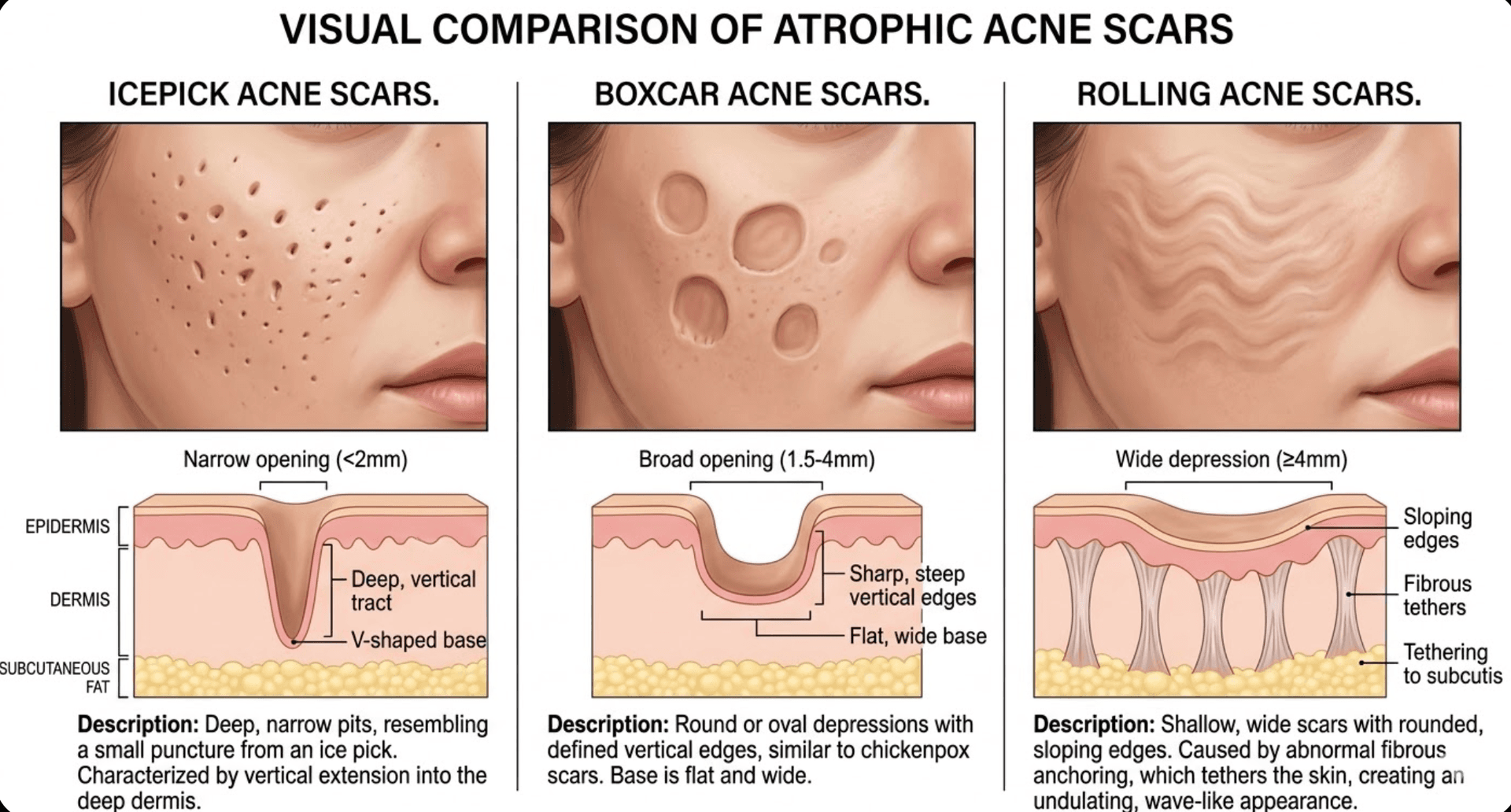
Rolling scars create a wave-like undulation in the skin surface caused by fibrous bands of tissue pulling the dermis downward. They tend to appear more pronounced in certain lighting and can shift in appearance with skin hydration levels.
Because rolling scars involve a structural disruption in the deeper layers of the dermis, topical ingredients have a more limited effect than clinical procedures. That said, PDRN's ability to stimulate collagen production in the dermis means consistent use can gradually improve the appearance of rolling scars over time, particularly in their shallower presentations.
Boxcar Scars
Boxcar scars are defined, flat-bottomed depressions with sharp edges. They result from the destruction of collagen during severe inflammation. Deeper boxcar scars are difficult to address with topical treatments alone and often benefit from clinical interventions such as microneedling or laser resurfacing.
Shallower boxcar scars respond better to topical PDRN, and the ingredient is an excellent support tool post-procedure for anyone who has undergone clinical treatment. PDRN's regenerative properties accelerate the tissue repair that procedures initiate.
Ice Pick Scars
Ice pick scars are narrow, deep channels that extend into the dermis or even the subcutaneous layer. They are the most structurally severe form of atrophic acne scarring and the most difficult to address with topical treatments.
For ice pick scars, PDRN is most useful as a supportive ingredient alongside clinical treatment rather than a standalone solution. It can improve the texture and health of surrounding skin, reduce accompanying PIH, and support recovery from procedures. Expecting topical PDRN to significantly remodel deep ice pick scars on its own would be setting an unrealistic bar.
Choosing the right PDRN product for your specific scar type matters. Browse our independently researched product recommendations for a curated selection of PDRN serums and formulas suited to different scar presentations and skin types.
Fresh Scars vs. Old Scars: Does the Age of a Scar Matter?
The short answer is yes, but not in the way most people expect.
Fresh scars and active breakouts are actually where PDRN can have its most immediate impact. When inflammation is still active or a scar is newly formed, the tissue is still in an active repair state. Introducing PDRN at this stage means you are supporting the collagen synthesis process while it is already underway, which can meaningfully influence the final appearance of the scar before it fully sets.
For people dealing with both active acne and existing scars, PDRN's anti-inflammatory properties are particularly valuable. Calming ongoing inflammation reduces the likelihood that current breakouts will result in severe scarring in the first place.
Old, established scars present a different challenge. Scar tissue that has fully matured is more resistant to remodeling than fresh tissue. That does not mean PDRN cannot help, but results will be more gradual and more modest for deep structural scarring compared to fresh or shallow marks. Consistent use over three to six months is the realistic minimum for seeing meaningful change in older atrophic scars.
What Results Are Realistic to Expect?
Honesty matters here. PDRN is not a clinical procedure, and it should not be marketed as one.
For PIH and surface discoloration, PDRN is genuinely effective as a topical treatment and most consistent users see meaningful fading within six to twelve weeks.
For shallow atrophic scars, including mild rolling and boxcar presentations, PDRN can produce visible improvements in texture and depth over a three to six month period of consistent daily use.
For deep structural scarring, including severe ice pick and deep boxcar scars, topical PDRN is best understood as a supportive and complementary ingredient rather than a primary treatment. It improves the overall skin environment, reduces inflammation, and accelerates post-procedure recovery, but it is not a substitute for clinical intervention in severe cases.
The readers who are most likely to be disappointed by PDRN for acne scars are those with deep structural scarring who expect the same results as a laser peel. The readers most likely to be genuinely impressed are those dealing with PIH, fresh scarring, and shallow atrophic marks who have not yet found an ingredient that addresses the collagen deficit rather than just the surface.
If you want to read the peer-reviewed studies behind PDRN's collagen synthesis and tissue repair mechanisms, our White Papers and PDF Guides compile the clinical research in one place.
Building a Routine Around PDRN for Acne Scars
PDRN works best as part of a considered routine rather than in isolation. A few principles to keep in mind:
Apply PDRN to clean, slightly damp skin before heavier moisturizers to maximize absorption. Serums should go on before creams in your layering order.
Pair with SPF daily. UV exposure worsens PIH significantly and slows the collagen remodeling process. Broad-spectrum SPF 30 or higher every morning is non-negotiable when treating acne scars of any type.
Avoid over-exfoliating. A compromised skin barrier slows down every regenerative process, including the ones PDRN is trying to support. If your routine currently includes daily exfoliating acids or high-frequency retinol use, consider whether your barrier is healthy enough to support PDRN's repair activity. Our Barrier Scanner can help you assess this.
Be consistent. The collagen remodeling cycle operates on a weeks-to-months timeline. Sporadic use will not deliver the cumulative effect that consistent daily application builds over time.
Final Takeaways
- PDRN addresses acne scars through collagen stimulation, fibroblast activation, and anti-inflammatory activity, mechanisms that most conventional topical scar treatments do not target.
- PIH, fresh scarring, and shallow atrophic scars respond best to topical PDRN.
- Deep structural scars, including severe ice pick and boxcar presentations, benefit most from PDRN as a post-procedure support ingredient alongside clinical treatment.
- Fresh scars are more responsive than old ones, but PDRN can produce gradual improvements in established scarring with consistent use over three to six months.
- Daily SPF, a healthy skin barrier, and consistent application are the variables most within your control.
Recommended Products
The right PDRN formulation depends on your scar type, skin sensitivity, and where you are in your treatment journey. Browse our independently researched product recommendations for a curated selection of PDRN serums and moisturizers, each selected based on formulation quality, PDRN concentration, and ingredient transparency.
About the Authors & Reviewers
The protocols and research on PDRN Science are collaboratively developed by Cole Stubblefield, a Clinical Research Associate, and Ashley Stubblefield, a Licensed Esthetician. Our mission is to bridge the gap between complex clinical data and practical, everyday skincare recovery.
Ready to upgrade your knowledge?
The PDRN Protocol is an advanced, step-by-step clinical guide to using Polydeoxyribonucleotide for cellular regeneration and anti-aging.
Buy The PDRN ProtocolFrequently Asked Questions
Does PDRN actually help acne scars?
Yes, particularly for post-inflammatory hyperpigmentation, fresh scarring, and shallow atrophic scars. PDRN stimulates collagen production and reduces inflammation through mechanisms that most surface-level scar treatments do not address. Deep structural scars respond more gradually and benefit most from PDRN as a complement to clinical treatment.
How long does PDRN take to work on acne scars?
PIH and surface discoloration typically show improvement within six to twelve weeks of consistent daily use. Shallow atrophic scars require three to six months for visible change. Deep structural scars require longer timelines and are best addressed alongside clinical procedures.
Can PDRN be used on active acne?
Yes. PDRN's anti-inflammatory properties make it well-suited for use alongside active breakouts. Reducing inflammation at the breakout site can help minimize the severity of scarring that forms during the healing process.
Is PDRN better than vitamin C for acne scars?
They address different aspects of scarring. Vitamin C is primarily useful for fading PIH through melanin inhibition. PDRN addresses the collagen deficit beneath the scar through regenerative mechanisms. For PIH alone, both are relevant. For atrophic scarring with a structural component, PDRN targets the problem more directly.
Which PDRN product is best for acne scars?
Formulation quality, PDRN concentration, and supporting ingredients all influence how effective a product will be for your specific scar type. Browse our product recommendations for options suited to different presentations and skin types.
Medical Disclaimer: The information provided in this article is for educational purposes only. It is not a substitute for professional medical or dermatological advice, diagnosis, or treatment. Always seek the guidance of a qualified healthcare provider with any questions you may have regarding a medical condition or skincare concern.
Affiliate Disclosure: Some links on this page are affiliate links. PDRN Science may receive a small commission if you purchase through these links, at no additional cost to you. This helps support the continued research and editorial work on this site. Our recommendations are never influenced by affiliate relationships.